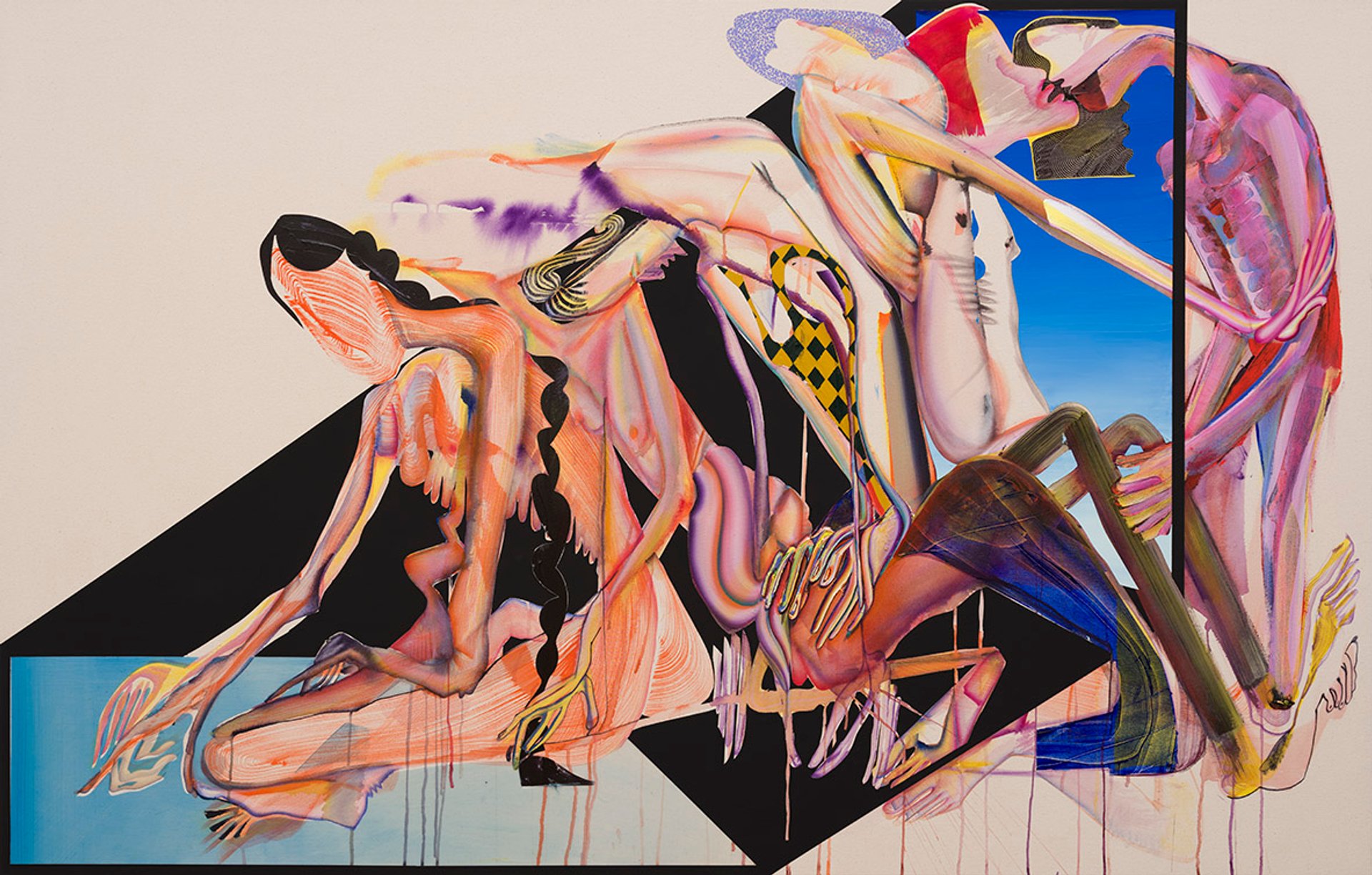
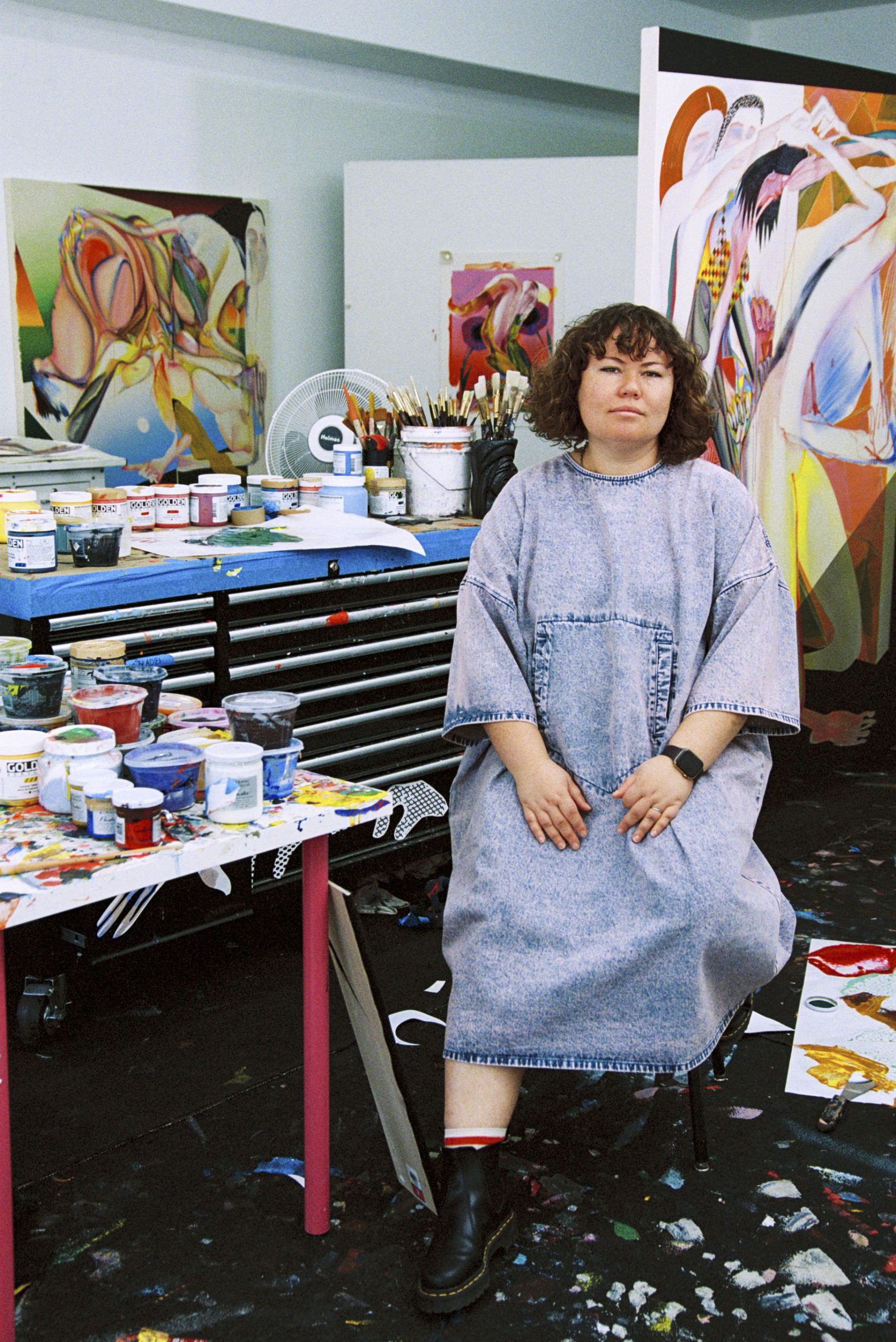
Christina Quarles approaches the canvas not as a window into a scene, but as a mirror for the internal sensation of living within a physical form. In her exhibition The Ground Glows Black, she delves into the specific tension of existing in one’s own body while looking out at an often-fragmented world. This perspective was nurtured early on in Los Angeles, where her time at LACHSA (Los Angeles County High School for the Arts) provided the technical foundation and community necessary to view art as a viable lifelong pursuit. For Quarles, the early rigor of her training was less about mastering a specific look and more about building a supportive network of peers that continues to sustain her career today.
The vibrancy of her work is immediately striking, yet her "poppy" color palette serves a purpose far deeper than simple aesthetics. As a mixed-race individual, Quarles purposefully moves away from using color to describe literal skin tones, opting instead to communicate temperature and psychological experience. She applies color relationally, often placing opposing hues side-by-side to force a visual vibration that makes the figures feel alive and shifting. This fluidity is further anchored by her treatment of hair, a feature she emphasizes as a bridge between the gestural, fleshy figuration of her subjects and the highly patterned, structured backgrounds they inhabit.
Related article - Uphorial Shopify
Getting to Know: Christina Quarles
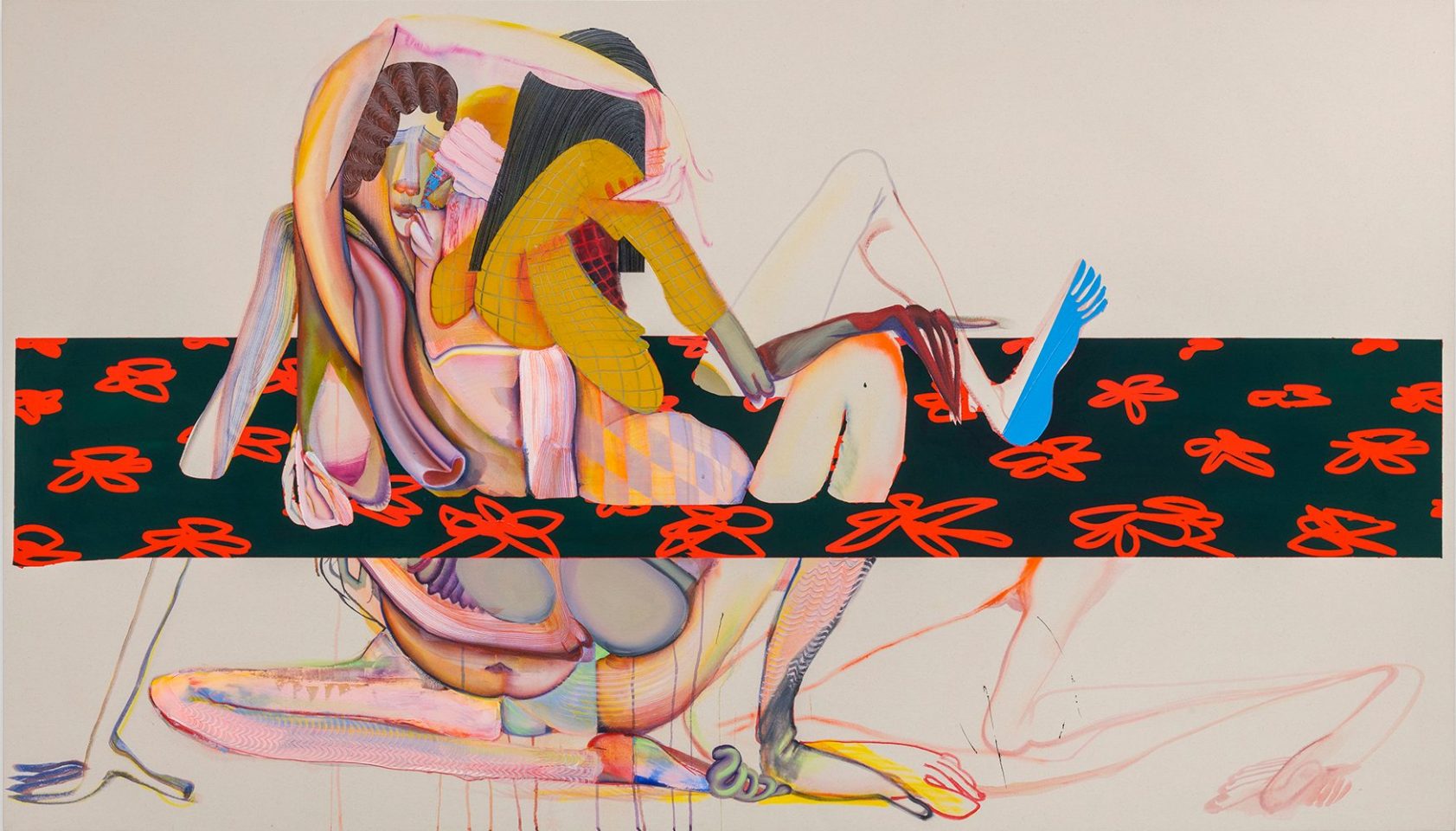
Despite her technical mastery, Quarles finds that the greatest hurdle to her practice is the modern scarcity of time. To combat the constant pull of digital distraction and reclaim moments for pure observation, she recently replaced her smartphone with a "dumb phone." This intentional disconnect allows her to find inspiration in the mundane and the "third iterations" of pop culture—ideas filtered through thrift stores, old cartoons, and music—rather than seeking influence solely from the traditional art canon. She values these distorted, recycled versions of reality because they mirror the way humans process and reinterpret their surroundings.
Her signature maximalist style was not something she initially embraced; in fact, she spent years resisting it in favor of a more detached, conceptual approach. The breakthrough only occurred during graduate school when she began creating "doodles"—spontaneous line drawings featuring "bad words" and unrefined language that felt separate from the pressures of "Fine Art." These raw, impulsive works revealed a truth her more calculated pieces lacked. By finally allowing herself to lean into the "bad" drawings, she unlocked the fusion of color, line, and pop culture imagery that defines her work today, proving that the most compelling art often emerges when an artist stops trying to be serious and starts being honest.