LONDON - The grass at Centre Court, usually a canvas for the most elegant displays of tactical mastery, became something far more visceral on this July afternoon. In a 2026 Wimbledon quarter-final that will be etched into the annals of sporting history, the pristine surface bore witness to a five-hour struggle between the established order of Novak Djokovic and the relentless, ascending ambition of Felix Auger-Aliassime. It was a contest that defied the conventional expectations of age and momentum, transforming a mere tennis match into a profound meditation on the limits of human endurance. For five agonizingly beautiful sets, the two men traded blows, not just of skill, but of will, in a performance that demanded everything from their bodies and left their spirits exposed under the watchful gaze of a captivated global audience.
From the opening point, it was clear that this would be a match defined by attrition rather than quick-fire brilliance. Auger-Aliassime, the younger challenger seeking to claim his place in the pantheon of the greats, arrived with a plan that centered on power and precision, forcing Djokovic to cover every inch of the court. The rallies that followed were symphonies of endurance, stretched to the absolute breaking point as both players engaged in a high-stakes tactical chess match. Each point was a narrative unto itself, a miniature struggle for supremacy where the smallest error in judgment or a momentary lapse in concentration could—and often did—carry monumental consequences. The sound of the ball hitting the strings, the frantic footwork on the worn grass, and the collective intake of breath from the crowd created an atmosphere of almost unbearable tension.
At thirty-nine years of age, Djokovic entered the match with a legacy already secured, yet he performed with the hunger of a player still fighting for his first title. His longevity is a subject of endless fascination and analytical dissection, but to witness it in person is to understand that it is fueled by something far more potent than diet or training regimens alone. It is a psychological fortitude that borders on the unnatural. Against a younger, fitter opponent who unleashed a barrage of serves and baseline drives, Djokovic did not merely survive; he adjusted. He absorbed the pressure, folded it into his own game, and slowly, systematically, turned the match into a test of who could endure the longest. It was a masterclass in strategic storytelling, where the older champion used his experience to dictate the tempo, forcing his challenger into positions of extreme psychological discomfort.

Related article - Uphorial Shopify

The final scoreline, while a testament to the closeness of the contest, fails to capture the emotional weight of the victory. When the final ball sailed past Auger-Aliassime and Djokovic slumped to the court in a mixture of exhaustion and triumph, the stadium erupted in a way that felt less like a celebration of a win and more like an acknowledgment of a singular, historic achievement. This was not just another quarter-final victory; it was a defiant statement against the inevitable erosion of time. By securing his place in the semi-finals, Djokovic did more than extend his run at the Championships; he reminded the world that the narrative of professional sport is not always written by the young, but by those who refuse to stop believing that their best performance is still ahead of them.
The significance of the match resonated far beyond the court. Observers were left to grapple with the reality of what they had just witnessed: a forty-year-old in the making competing at a level that exceeded most players in their physical prime. It served as a profound transformational framing of what it means to be an athlete in the modern era. The boundary between the "twilight" of a career and the summit of one's capability has become increasingly blurred, and Djokovic is the primary architect of this new reality. His performance was a blend of technical perfection and spiritual stubbornness, a demonstration that the mind can often sustain the body long after the rest of the world has decided it is time for the lights to fade.
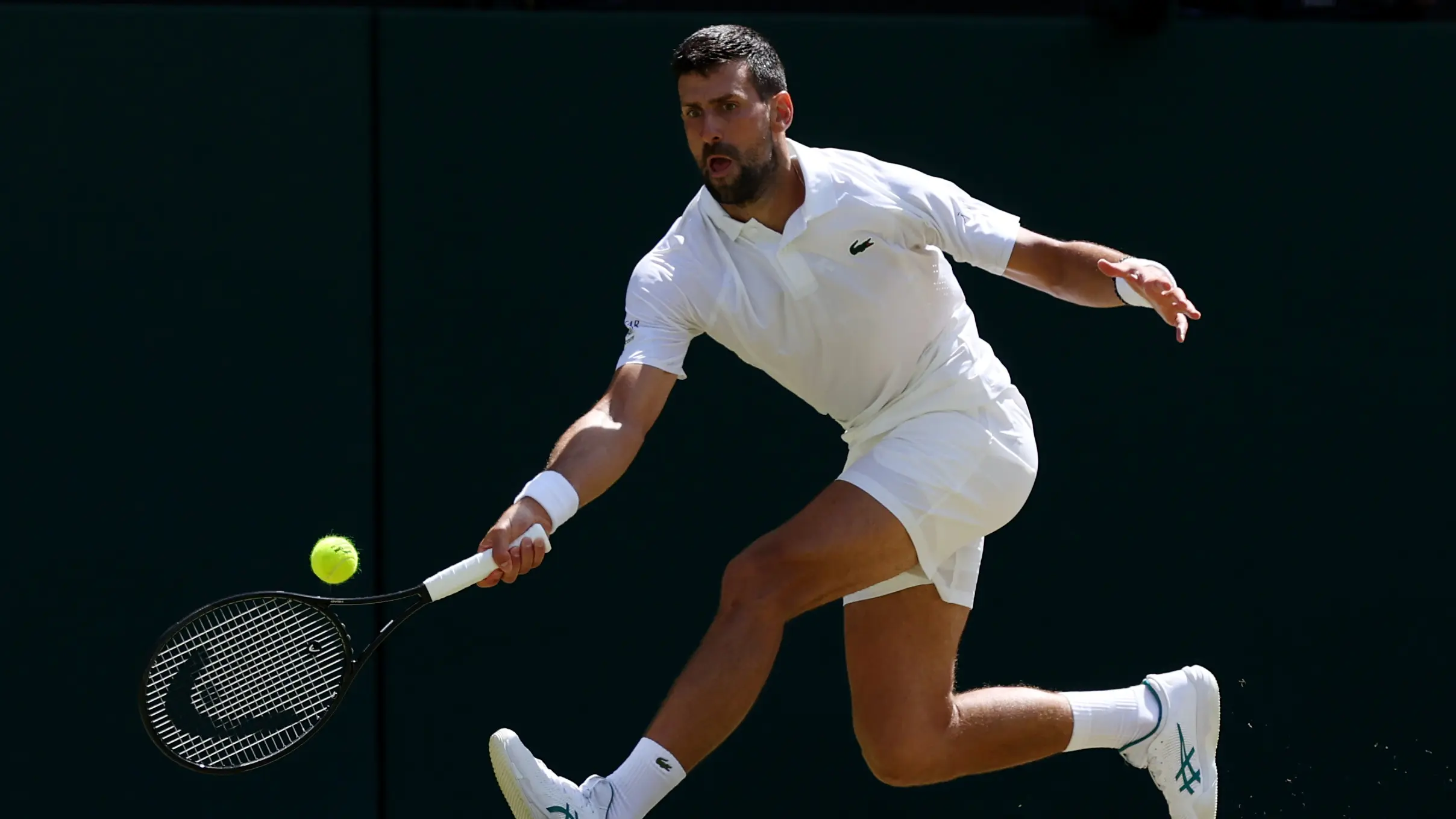
For Felix Auger-Aliassime, the defeat will undoubtedly be a bitter pill, yet it is one that he will likely look back upon as a formative milestone. To be the catalyst for such an epic display of resilience is a testament to his own caliber, even if he fell just short of the win. He pushed a titan to the absolute edge of his capability, forcing him to reach into the depths of his long and storied history to find the path to victory. There is no shame in such a defeat; there is only the sobering, valuable lesson of what it takes to challenge the best to ever do it.
As the sun began to dip below the roof of Centre Court, signaling the end of a grueling five-hour ordeal, the focus of the tournament shifted toward the semi-finals. Yet, the echoes of this match lingered, a reminder of the drama that the Wimbledon grass is uniquely capable of hosting. The 2026 Championships have seen many highlights, but this battle of generations—the old guard against the new challenger—stands apart. It was a day where the sport of tennis felt grander, more taxing, and more deeply human than it has in years. It was an encounter that asked the question of what happens when iron will meets relentless ambition, and in the end, it gave us the only answer that matters: it creates a moment in time that we will be talking about long after the trophies have been handed out and the grass has been cut for the next season. The legend of Novak Djokovic continues, but on this day, the legend of the sport itself was written in the sweat, the strain, and the spectacular brilliance of two men who refused to yield until the final point was lost.