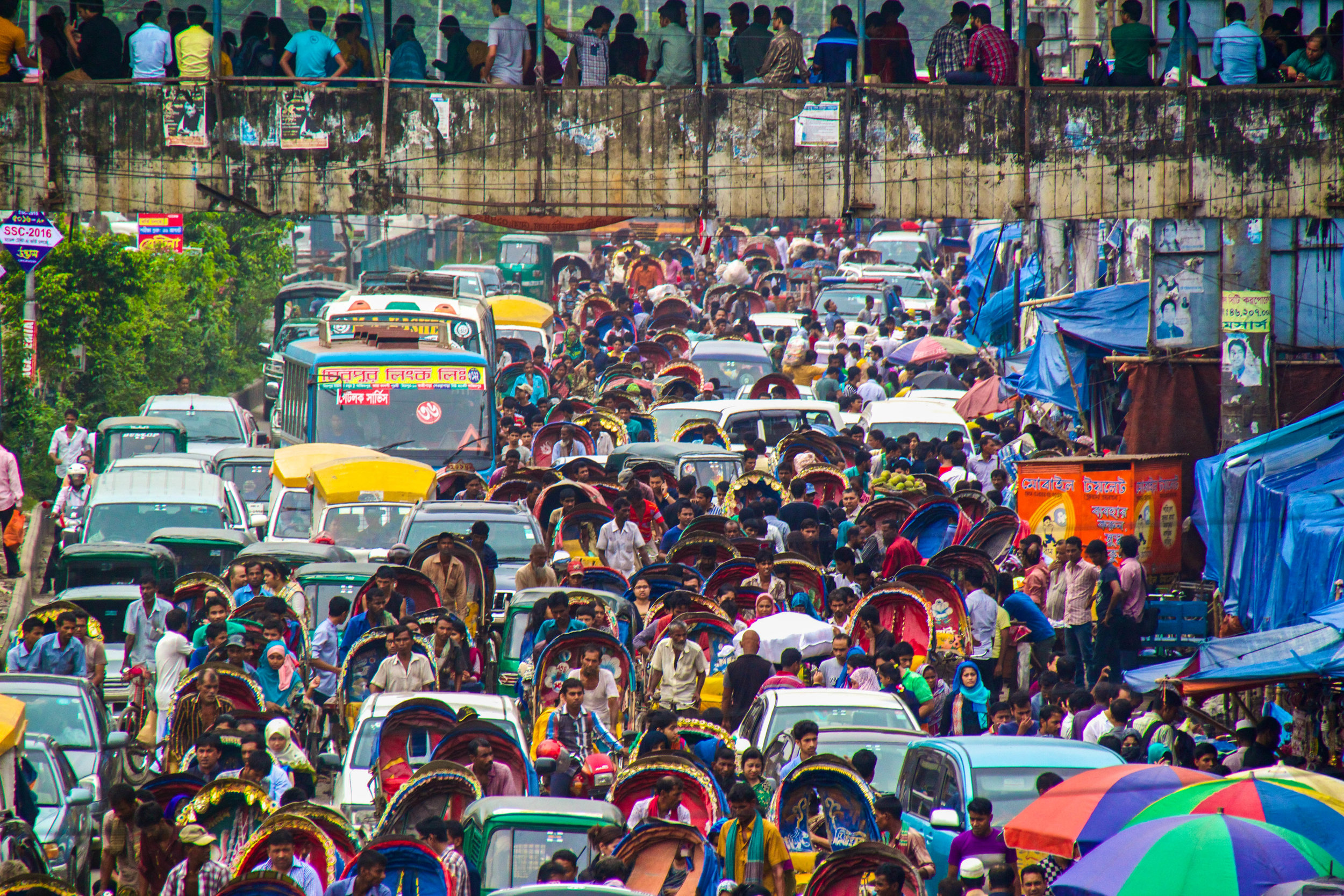
Dhaka, Bangladesh, stands as the most chaotic city on earth according to travel documentarian Drew Binsky, who navigated the capital’s sprawl to experience what he describes as the “world’s most dangerous roads and public transportation”. Binsky began his journey on a "crazy train," describing a sensory assault of deafening horns that vibrate through the brain and thick dust, while locals casually smiled through their everyday commute. He noted the terrifying reality of the infrastructure, highlighting “wiggly” safety bars that seem insufficient to protect the passengers mobbing the carriages or sitting on the roof. To navigate this "madness," Binsky teamed up with his local friend, Nadir On The Go, who provided crucial context on the city’s 25 million unofficial residents and the grim statistic that 15 people die every day in Dhaka’s public transportation system. Nadir On The Go, who spent a decade in the United States before returning to his hometown, explained that the traffic is so severe it shapes the social fabric, often preventing friends from seeing each other for weeks because traveling even one kilometer can be a high-stress, hours-long endeavor.
Related article - Uphorial Shopify

The duo encountered a 10-year-old boy who has lived alone on a train platform for three years, surviving by collecting plastic bottles while his mother works in a garment factory. This child is part of a larger economy where tens of thousands of children sell snacks or trinkets on buses to keep their families alive, viewing public transport not as a way to get somewhere, but as a marketplace. Drew Binsky and Nadir On The Go took the boy for a meal and bought him his first pair of shoes and several sets of clothes; Binsky observed that the boy was fearful of an escalator despite his comfort jumping off and riding on top of moving trains. At street level, the city is powered by over one million rickshaws—the highest concentration on Earth—including manpowered bicycles and electric versions nicknamed "Teslas". Binsky observed that the gridlock is so profound it costs the country over $3 billion annually in lost productivity, and the public buses are so crowded they require passengers to jump off while the vehicle is still moving.
Nadir On The Go guided Binsky through the "Old Town," a culturally rich but narrow-streeted area where the lack of sidewalks and English signage makes it "not for beginners". Despite the staggering wealth gap—where one can move from a suffocating, gender-segregated bus to a luxury rooftop in minutes—the city remains driven by an “unstoppable rhythm”. Binsky and Nadir concluded their journey on a small wooden boat, noting that 50,000 to 100,000 people cross the polluted river daily.
Ultimately, they found that while the roads are lethal and the noise is overwhelming, the true engine of Dhaka is the patience and resilience of its people. Navigating Dhaka is like trying to perform a delicate dance in the middle of a stampede; while the environment is constantly pushing against you, the only way to move forward is to embrace the chaotic energy of the crowd.