In the crystalline, turquoise expanse of the U.S. Virgin Islands, where the horizon dissolves into the Caribbean Sea, sits a culinary destination that defies the conventional physics of the hospitality industry. Lime Out is not merely a restaurant; it is a floating testament to human ingenuity, a structure anchored in the middle of a marine sanctuary that has transformed the logistical nightmare of off-grid operation into a high-volume, world-class dining experience. Co-founders Dane Tar and Rich Bernowski have essentially built a self-sustaining ecosystem on the water, proving that with enough technical resolve and creative vision, the most isolated locations can become the stage for a gastronomic revolution.
The operational reality of Lime Out is a lesson in extreme sustainability, a masterclass in managing resources when the nearest utility grid is miles away. Without the luxury of land-based electricity or municipal water hookups, the restaurant operates as a floating micro-grid. It relies entirely on a sprawling array of solar panels and massive battery banks to energize everything from heavy-duty ice machines to sophisticated water-desalination systems that convert salt water into potable supply. This is not just a commercial endeavor; it is an exercise in engineering. The constant battle against the corrosive, invasive nature of salt-water environment—a perpetual war against rust and degradation—requires that every piece of hardware on board be specifically engineered for marine survival. The equipment must endure conditions that would decimate a standard restaurant kitchen in a matter of weeks.

Related article - Uphorial Shopify
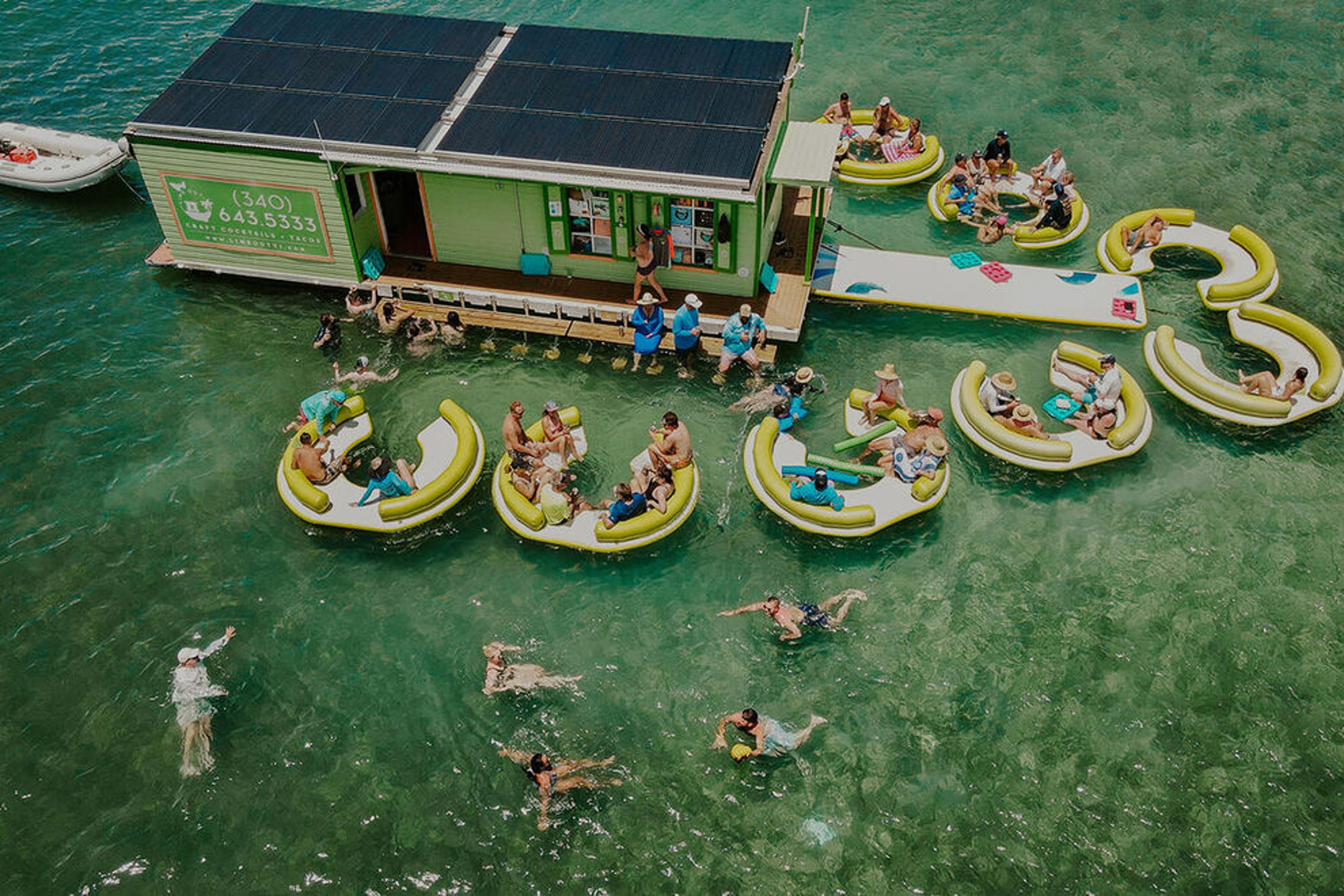
Logistically, the restaurant functions less like a brick-and-mortar establishment and more like a tactical supply chain operation. Because space on the floating platform is at an absolute premium, there is no room for the sprawling inventories of a traditional kitchen. Instead, the team relies on a rigorous, daily synchronization between a land-based warehouse and the floating platform. Everything from the raw ingredients to the staff and the waste removal must be shuttled across the waves via a small fleet of dinghies. This daily migration is a monumental hurdle, requiring a level of discipline and timing that would be unnecessary in any other setting. Furthermore, the threat of weather looms as a perpetual seasonal reality; the entire structure is designed to be mobile, engineered to be towed away at a moment's notice should a hurricane or severe storm track toward the islands.

Despite these logistical constraints, the kitchen operates with the blistering pace of a high-volume food truck, often churning out upwards of 1,200 tacos on peak days. This volume is maintained without a compromise in quality, a directive championed by Chef Amaro, who has centered the menu around the concept of culinary excellence in isolation. The signature offerings—specifically the succulent shrimp tacos and the slow-cooked braised rib—have become legendary in their own right, drawing boaters from across the territory who navigate the open water specifically to dine in a place that has no address. The focus remains steadfast: the food must be good enough to justify the journey.
The experience of dining at Lime Out is intentionally immersive, a departure from the "tourist trap" label that often plagues tropical destinations. By requiring customers to arrive by boat, the founders have curated a unique, desolate, and serene environment that forces diners to detach from the mainland and surrender to the rhythm of the ocean. The "vibe" is one of total seclusion, where the water is both the backdrop and the floor, creating a sense of intimacy with the environment that is impossible to replicate in a land-based setting. It is a destination that demands participation, turning the act of eating into a voyage.As the waves lap against the platform and the sun reflects off the solar arrays, the logistical effort begins to fade into the background, replaced by the simple, profound satisfaction of the meal. The experience confirms what Tar and Bernowski have long argued: the extreme effort is, in every way, worth the result. In an industry defined by consistency and predictability, Lime Out offers something increasingly rare: a moment of genuine wonder, achieved through the relentless, unseen labor of keeping a dream afloat in the middle of the sea. It stands as a defiant example of what is possible when human ambition is combined with the audacity to build, sustain, and thrive exactly where no one else thought it could be done.