Barcelona's architectural identity owes its singular distinction to Antoni Gaudí, the maestro who not only participated in the Art Nouveau movement sweeping Europe but fundamentally transformed it, leaving behind masterpieces unlike anything previously seen. HENI Talks highlights how Gaudí’s career was a progressive journey of innovation, where every commission served as a step toward defining his definitive, nature-infused style.
Gaudí’s architectural manifesto was first unveiled in Casa Vicens, his initial major commission. On the facades, he demonstrated an immense talent by combining Eastern, Islamic, and Muja architecture, deliberately exploiting contrast between materials such as iron, ceramic, brick, and wood, which resulted in an "exuberant burst of color and texture". In this early work, nature was elevated into architecture, resembling an interior garden with plant motifs spreading across walls and ceilings to promote occupant relaxation and leisure, complete with domes featuring flying birds.
?_a=BAVAZGE70)
Related article - Uphorial Radio
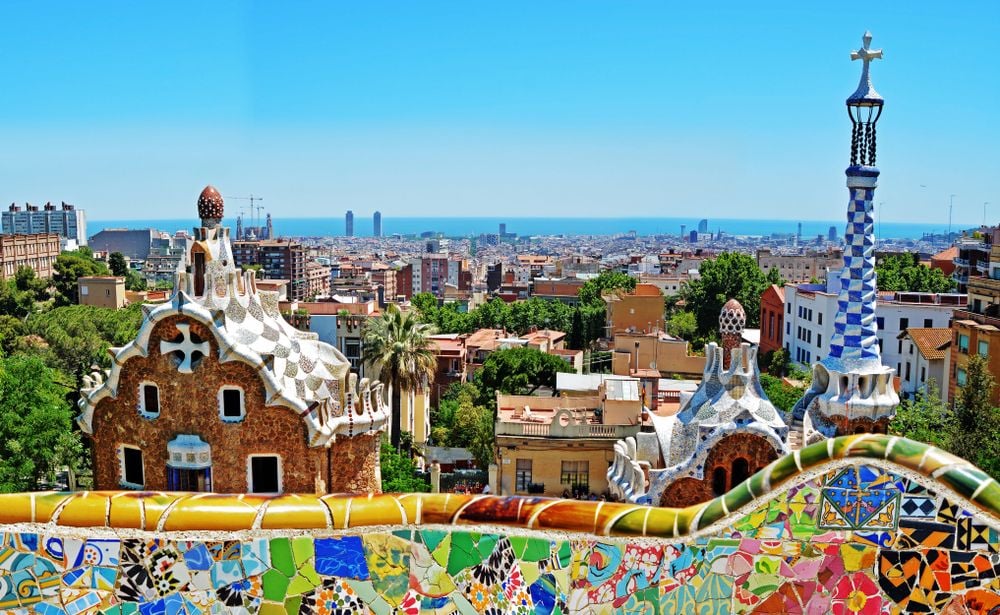
His vision was then advanced in Palau Güell, commissioned by the industrial tycoon Eusebi Güell. This building's symmetry and massing evoke a Venetian Renaissance palace. A key insight from HENI Talks regarding Palau Güell is the realization that in Gaudí’s work—one of the most decorative and ornamental of architects—there is no contradiction between ornament and function. Great architecture, he proved, must be fantastically functional. This project, which includes wonderful basement stables accessed by horseback and is crowned by a phoenix symbolizing the Catalan cultural renaissance, was his first major effort to develop his personal approach, merging modern technology with artisanal craft that would become lifelong trademarks. In the central ground space of Palau, despite a small footprint, Gaudí focused on height, orchestrating his different ideas into a majestic, soaring space that resembles a cathedral more than a domestic dwelling. This was a pure expression of the gesamtkunstwerk, or total work of art, integrating sculpture, painting, metalwork, woodwork, and stained glass into one beautiful design. Gaudí, while utilizing a strong Gothic sensibility, was equally interested in the exterior, especially the rooflines, which he mastered by transforming them into aesthetically pleasing and useful additional spaces for occupants, incorporating chimneys for ventilation, smoke evacuation, and purely aesthetic functions.
The broader Modernista movement, under which Gaudí’s work is categorized, was unified by a powerful commitment to public space, establishing architecture as a public art in Barcelona and transforming the city for everyone. This commitment is evident in areas like the Manzana de la Discordia, which features different types of Modernista architecture. Gaudí’s symbolic language is prominently displayed in the iron gates of the Güell Pavilion, shaped as a ferocious dragon, a major symbol of Catalonia and a recurring motif in his art. This dragon motif is nowhere more spectacular than atop Casa Batlló. Drawing partially from Islamic art, Gaudí incorporated a love of color into his architecture, creating a perpetual "fiesta" in the urban environment and within the houses themselves. Casa Batlló, described as a total work of art, demonstrates Gaudí’s intervention in every detail—design, color, form, space, and light—making the entire house an exercise in nature. The design uses glass and tiles reflecting one another to evoke the impression of waves of water. Modern technology, such as an elevator and an innovative lightwell that distributes air and light, was integrated, with windows systematically increasing in size as they descend to maximize natural illumination. The design references both botany and geology, with elements like a wooden staircase representing the spine of a large animal rising from the ocean bed.
His later commission, Casa Milà (nicknamed La Pedrera or stone quarry), marked a stylistic culmination and departure. It was the "ultimate modern building" and the purest expression of Modernista, eschewing his earlier references to Gothic, medieval, or Islamic styles. Walking through La Pedrera evokes a sense of prehistoric, primordial time, akin to a place for cave dwellers, yet possessing the grandeur of Europe's greatest cathedrals. Its roofline is noted as the most magnificent of his commercial buildings, featuring extraordinary figures like warriors and gargoyles that serve as aesthetic protectors and create a "mini pleasure park" for the inhabitants.
All these works served as precursors and experiments for his final, massive undertaking: the temple of La Sagrada Família. Gaudí famously stated, "The straight line belongs to men, the curve one, to God. Nothing is art if it does not come from nature". He conceived the temple as a great visual bible in stone. Inside the soaring nave, which reaches over 45 meters, the columns are meticulously designed to resemble tree trunks branching out at the top, creating a spiritually charged, forest-like atmosphere. This dedication reflected his deep religious faith and his entire way of seeing the world, successfully orchestrating all his stylistic developments into one ultimate, comprehensive edifice, bringing together the entirety of what Art Nouveau was about.