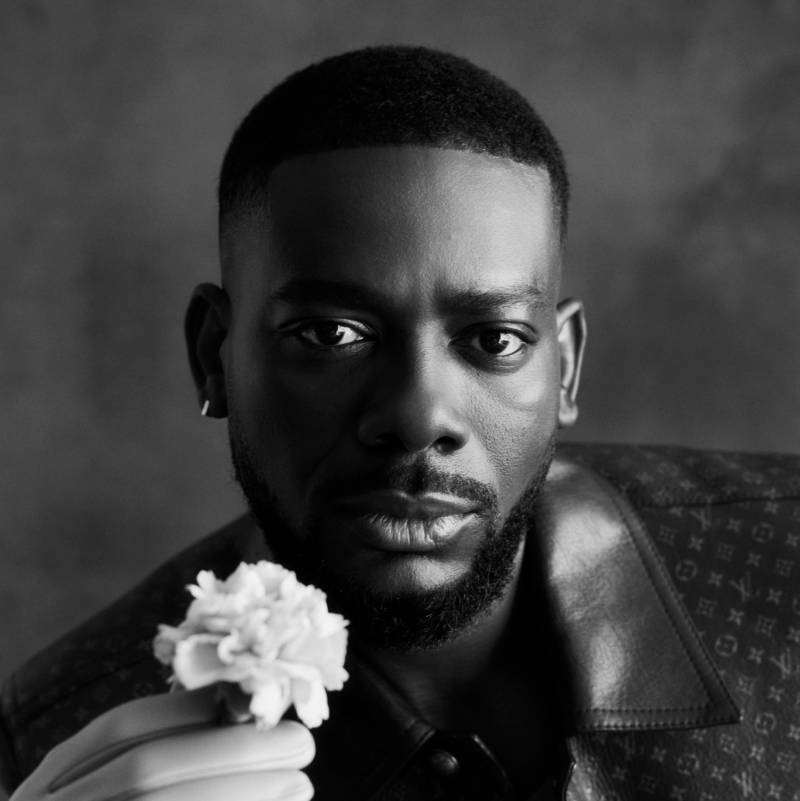
The sound of a man who has mastered his own voice carries a specific resonance, a quality that defines David Oyelowo not just as an actor, but as a cultural architect. In a recent, wide-ranging conversation on the One54 Africa podcast, Oyelowo invited listeners into the interior of a career built on the bedrock of faith, tenacity, and a relentless pursuit of truth. For an artist who has inhabited the skins of some of history’s most formidable figures—from the strategic brilliance of Martin Luther King Jr. to the personal resolve of Seretse Khama—the discussion was less a retrospective of past accolades and more a strategic blueprint for the future of global Black storytelling.
The conversation opened with a reflection on the foundational tension of his upbringing, a duality that many in the global diaspora navigate but few articulate with such clarity. Born to Nigerian parents and raised between the bustling, storied streets of London and the vibrant, grounding reality of Nigeria, Oyelowo described his childhood as a process of constant cultural calibration. It was, he revealed, the moments of return—the physical act of stepping onto Nigerian soil—that acted as the primary catalyst for his internal evolution. In those spaces, stripped of the peripheral expectations placed upon him by the British educational and social systems, he found a profound sense of belonging. This was not merely nostalgia; it was a transformational framing of his own identity. The spoke of the confidence that flourished when he realized that his heritage was not a complication to be managed, but the very source of the perspective that would later make his performances so deeply resonant.
Yet, the transition from finding oneself to finding one's place in the machinery of Hollywood is a chasm that swallows many. Oyelowo spoke with raw, emotional precision about the "multi-year struggle"—the years spent battling the inertia of an industry that, for too long, viewed Black narratives as niche or commercially risky. He pointed to the arduous journeys of Selma and A United Kingdom, projects that demanded not just his talent as an actor, but his relentless commitment as a producer. These were not just films; they were interventions. He detailed the systemic resistance he encountered, a barrier that insisted Black stories be peripheral to the American or British experience rather than central to the human one. For Oyelowo, the lesson was clear: to wait for the traditional gatekeepers to widen the frame was a strategy of diminishing returns. The only way to move the needle was to change the architecture of the industry itself.

Related article - Uphorial Shopify

This realization birthed a new strategic imperative: the creation of independent ecosystems. Oyelowo’s involvement in co-founding Mansa, a streaming platform specifically engineered to preserve and elevate authentic Black stories from the global diaspora, stands as the crowning achievement of this philosophy. By bypassing the traditional studio gatekeepers, he is attempting to build a digital home where the nuance of African and diasporic storytelling does not need to be translated for a Western gaze. It is a bold, necessary move that moves beyond the politics of representation and into the politics of ownership. He spoke with a refreshing candor about the "scarcity mindset" that has historically plagued the entertainment industry—the false notion that there is only enough room for a limited number of Black stars or Black stories. In its place, he advocates for a radical, collaborative abundance. He envisions a world where Black Brits, African Americans, and Africans do not compete for scraps of influence but instead link arms, leveraging their collective creative capital to scale their impact across borders.
This collaborative ethos extends beyond the boardroom and into his profound commitment to the next generation. Oyelowo’s work, particularly through the David Oyelowo Leadership Scholarship for Girls, underscores a belief that mentorship is the highest form of stewardship. He views his success not as an individual victory, but as a bridge—a structure he must strengthen so that those who follow do not face the same structural erasures he fought to overcome. His perspective on community building is rooted in the understanding that the "hero's journey" is a myth we often apply to individuals when it should be applied to cultures. True transformation, he argues, is not about the elevation of a single icon, but about the systemic uplift of the entire ecosystem.
As the conversation drew to a close, it was impossible to ignore the weight of Oyelowo’s vision. He is a man who has reconciled the demands of international stardom with the deeper, more complex calling of cultural preservation. He is no longer satisfied with simply inhabiting a script written by others; he is actively drafting the future of a global cinema that recognizes the depth of the Black experience as universal. His words serve as a rallying cry for a generation of storytellers who understand that the most potent tool in their arsenal is their own identity. David Oyelowo’s journey from a young boy moving between London and Lagos to a titan of global media is not just a success story—it is a map. It shows that when one possesses the precision to identify their history, the intelligence to curate their own path, and the courage to frame their own narrative, the industry doesn't just change; it begins, finally, to reflect the true, kaleidoscopic nature of the human experience.