At the heart of Watches and Wonders in Geneva, Switzerland — the watch industry’s premier global event — Cartier once again asserted its formidable presence with an expansive booth, signaling its significant brand power. As noted by astute luxury market observer Kevin O'Leary, Cartier, a marque with a watchmaking lineage tracing back to 1853, has witnessed an extraordinary surge in popularity over the past quarter-century, celebrated for its eclectic designs appealing to both men and women. O'Leary highlights that the brand's enduring allure stems from its unparalleled ability to masterfully combine the art of fine jewelry making with intricate watchmaking, thereby elevating its creations from mere timepieces to highly coveted collectors' items. This profound commitment to artistry is deeply embedded in Cartier's heritage, showcased through historical exhibits such as a exquisite 1907 desk clock, evoking the grandeur of a Fabergé egg, a 1943 mystery clock embodying the nascent Art Deco movement, and even a whimsical magnetic clock featuring a balloon suspended in liquid, all demonstrating exquisite craftsmanship in white gold with manual winding mechanical movements.
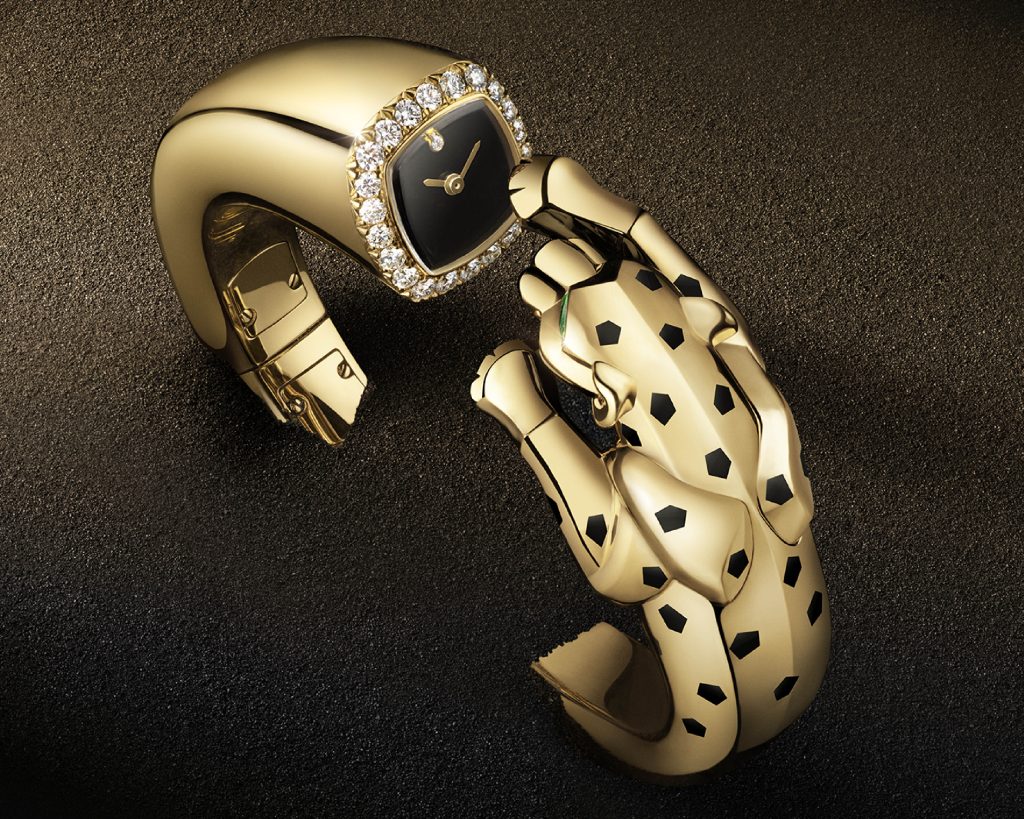
Cartier's latest introductions continue to push the boundaries of design and horology, particularly within its high jewelry watch collections. The iconic Cartier Panther has been ingeniously re-imagined in a creation O'Leary vividly describes as a "crazy chicken watch," deemed "insane" in its execution. This piece, requiring hundreds of hours for jewelers to craft, retains its original quartz movement for "fantastic timekeeping," while simultaneously serving as a powerful fashion statement. Its truly unique dial ensures that "you will not find another dial like this anywhere," making it a distinctive acquisition. Priced "well over €100,000," O'Leary posits this as a multi-generational investment, with such pieces typically retaining their value as "collectible art". The meticulous design process extends to other panther interpretations, like the "Cartier panther," which appears remarkably realistic, with pavé diamonds forming the animal's muscles, reflecting Cartier's in-depth study of the animal's anatomy.
Further expanding the high jewelry offerings, the new Tra series is introduced with multiple interchangeable bands, lauded for its convenience as a women's quartz watch and its classic Cartier aesthetic. O'Leary anticipates a more dramatic iteration of the Tra that will cause "grown men to weep," a testament to the sheer volume of craftsmanship invested in its design. The Diamond Cocktail watch, described as an elegant tennis bracelet adorned with a tiny quartz dial, captivated O'Leary with its beautifully set diamonds and artistic band. He predicts its widespread popularity, emphasizing that its value transcends mere carat weight, encompassing Cartier's superior design, dedicated service, and enduring support for its pieces. Notably, O'Leary observes a burgeoning trend where men are increasingly embracing these high-jewelry, "statement pieces," transforming them into "hood couture" suitable for a variety of occasions beyond just red-carpet events.
.

Related article - Uphorial Radio
Cartier 2025 Releases Ranked from the Best to the Most Controversial
For men's watches, Cartier unveiled several compelling new pieces, with O'Leary reserving "the best for the last". Topping his personal list of new releases is a reissue from the 1920s, a platinum (also available in gold) Tank offered in a highly limited series of only 200 pieces. This design, characterized by its "controversial" "winking face" aesthetic with the hour displayed on top and the minute on the bottom, and the crown innovatively relocated to the top of the dial for a clean look, is "completely different" and unique, making it O'Leary's top choice for his own collection. He openly embraces its controversial nature, desiring it to spark conversations.
The new Automatic Santos watch is described as "totally blinged out" yet undeniably a "fine timepiece". It maintains Cartier's classic Santos appearance while incorporating additional "pizzazz," making it versatile enough to be worn with jeans or a tuxedo. O'Leary underscores Cartier's pioneering role in designing rectangular and square dials, a heritage robustly continued by this automatic Santos. Another new Tank design offers a modern interpretation of the classic square, featuring a skeletonized open face with a distinct Art Deco vibe, crafted in gold.
Adding to the collection's allure is a Santos watch featuring a moving airplane within the dial—a miniature model of the plane flown by Santos, the pilot, which also functions as an oscillator. This "crazy dial" watch, made of white gold, offers "interesting complications" and beautifully exemplifies Cartier's classic jewelry aesthetic. Finally, the "completely nuts" Meteor Art piece represents a "level up in watchmaking," akin to "painted art". It showcases a panther meticulously created with gold layered over it, with some elements as fine as a human hair, producing a stunning 3D effect where the panther emerges from a "gold forest". While officially categorized as a men's watch, O'Leary speculates that women will equally "go nuts for it".
Reflecting on the comprehensive collection, O'Leary candidly presented his top five preferences:
1. The Crazy Piece, the 1920s remake, for its unparalleled uniqueness and controversial appeal.
2. The Santos with the moving airplane, lauded for its "nuts" dial and "bling action".
3. The Cartier Panther high-jewelry watch is appreciated as a "conversation piece" and a true work of art.
4. The Tra watch, which he ranked lower, primarily because he possesses numerous watches with a similar aesthetic in his existing collection.
5. The Diamond Cocktail series, which he admitted could easily have taken the fourth spot.
Ultimately, Cartier's latest releases at Watches and Wonders firmly underscore its standing as a world-class brand, expertly weaving historical reverence with cutting-edge artistry and horological innovation. The result is a collection of pieces that transcend mere timekeeping, positioned by O'Leary as "collectible art" and valuable multi-generational investments.