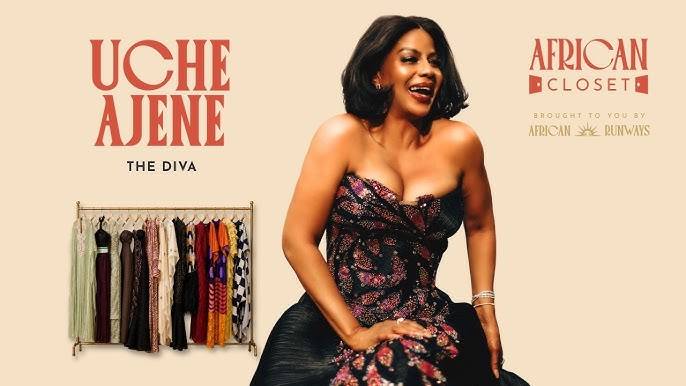
IKOYI - The doors to Uche Ajene’s personal sanctuary—a space she calls the African Closet—do not merely open onto a collection of garments; they reveal a meticulously curated narrative of identity, resilience, and an unwavering commitment to the sovereign power of individual style. Known to her peers simply as "Uch," Ajene has become a prominent voice in the discourse of modern Nigerian fashion, not because she follows the volatile dictates of seasonal trends, but because she has consistently rejected them. In her world, fashion is not a commodity to be consumed in mass-produced quantities; it is a profound expression of heritage, craftsmanship, and the rigorous pursuit of originality.
The roots of this philosophy trace back to the formative landscapes of her youth, where her sense of aesthetic was first ignited by an unlikely figure: her father. Within the family hierarchy, he was the true arbiter of style, the resident fashionista whose attention to detail and sartorial confidence left an indelible mark on his daughter’s developing consciousness. This early exposure fostered an acute awareness of the distinction between the mundane and the exceptional. During her years in secondary school, while others were gravitating toward the comfort of uniformity, Ajene was already actively subverting the status quo. She famously refused to settle for off-the-rack limitations, opting instead to sew her own custom high-waisted skirts. It was a modest but radical act of non-conformity, a tangible signal that she was an individual who intended to occupy space on her own terms.
As her life journey progressed, so too did the complexity of her wardrobe. The transition from those early, custom-sewn experiments to the high-end sophistication of contemporary Nigerian design represents a broader evolution in the African luxury market. Ajene speaks of this development with the critical eye of a connoisseur; she has moved beyond the simple novelty of owning clothes toward a deep appreciation for the integrity of construction, the nuance of fit, and the enduring quality of craftsmanship. For her, the wardrobe is no longer just a collection of items but a strategic assemblage of pieces that reflect a sophisticated, globally-aware consciousness. This transition has been facilitated by the rise of elite retail platforms like Temple Muse, which serve as essential bridges, aggregating the diverse creative output of the continent’s most visionary designers and placing them within reach of the discerning collector.
Related article - Uphorial Shopify

The collection she showcases is a masterclass in the versatility of modern African design, balancing the gravity of tradition with the buoyancy of contemporary flair. In her closet, one finds the work of Tiffany Amber, a long-standing staple whose classic silhouettes remain the benchmark for impeccable quality. These are garments that do not expire; they stand as foundational pillars, celebrated for their grace and architectural precision. Beside them sit the structured, multipurpose pieces from Lady Maker, chosen by Ajene for their seamless ability to traverse the divide between the boardrooms of corporate life and the social vibrancy of evening engagements.
The curation deepens with a nod to the new vanguard. Ajene speaks with palpable excitement about designers who are actively pushing the boundaries of what African fashion can express. She turns to Trish O Couture for pieces that embody a recent, bold evolution in sexy, contemporary design, and to Constant Walter, whose evening gowns and reimagined "boo-boo" designs have quickly ascended to the top of her list of favorites. There is a sense of structural play in her selection of Wani Fugar, particularly in the sophisticated, lounge-style pieces like the one-handed dress, which challenge conventional notions of silhouette. Even her travel and summer aesthetic is curated with intent: the vibrant, versatile jumpsuits from Oida provide a colorful counterpoint to her more structured workplace attire, proving that a high-fashion wardrobe need not be a monochromatic one.

Throughout her journey, Ajene’s approach remains rooted in the belief that the clothes we choose to wear are a form of communication—a dialogue between the cultural heritage of our past and the aspirations of our future. Her closet is a vibrant synthesis of these two poles, demonstrating that African fashion is not a monolithic entity to be neatly categorized, but a dynamic, evolving landscape. By prioritizing quality over quantity and original design over mass-market mimicry, she invites others to treat their own wardrobes with the same reverence.
For Uch, the ultimate success of her style journey is not defined by how many outfits she owns, but by how well those outfits tell her story. She occupies a space where sophistication is not a rigid performance but a natural consequence of wearing clothes that fit not just the body, but the spirit. In the African Closet, fashion is finally liberated from the superficial; it is revealed as a form of art that is meant to be lived in, challenged, and ultimately, deeply cherished. Her influence lies in this transformational framing: she has turned the simple act of dressing into a sophisticated form of self-actualization, reminding us all that the most powerful thing one can wear is a look that is entirely, unapologetically one’s own.