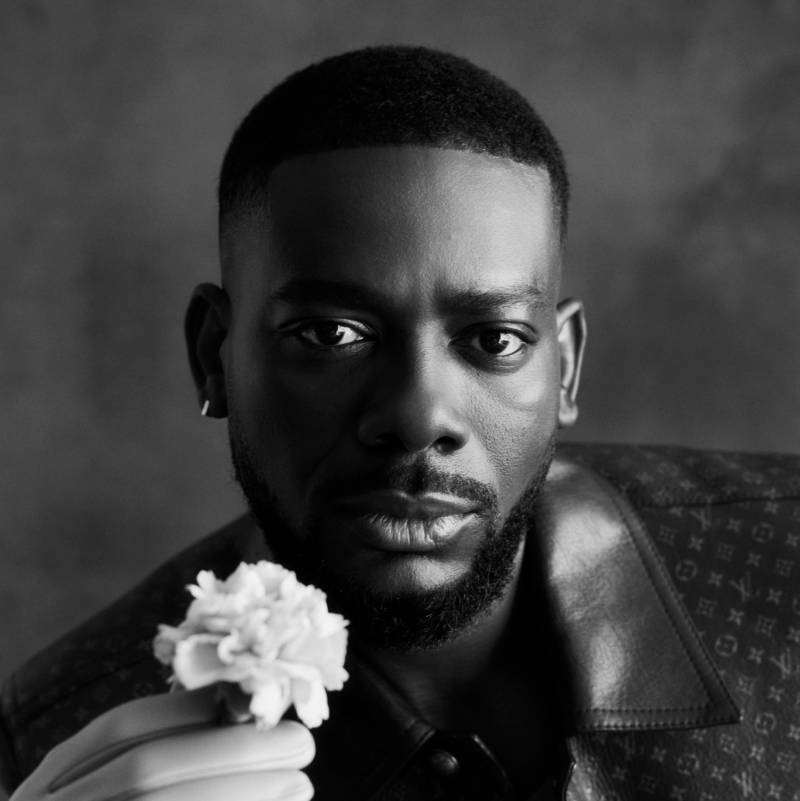
LAGOS - The historic courtyard of the King Kosoko Palace in Lagos, Nigeria, serves as far more than a mere backdrop for Adekunle Gold’s recent appearance on the Grammy’s Global Spin series; it is a profound declaration of lineage and purpose. Standing in the heart of a space steeped in centuries of history, the Nigerian Afropop visionary performed “Oba,” a standout track from his 2025 album Fuji. Backed by a resonant full band and a soaring ensemble of backup singers, the performance transcended the typical stage set, transforming into a visceral, rhythmic homecoming. In this setting, the music became a bridge between the regal traditions of the past and the expansive, borderless future of contemporary African sound.
“Oba,” which translates to “King” in the Yoruba language, captures the essence of the Fuji project. Musically, the track is a masterclass in genre-blending, where the rapid-fire, intricate percussion and vocal urgency of traditional Fuji music—the soundtrack of Lagos streets—are seamlessly integrated with the polished, global-facing production of modern Afropop. Adekunle Gold navigates this fusion with an effortless authority, his delivery oscillating between the rhythmic punch of Apala and the melodic sensitivity of contemporary R&B. Watching him command the stage, one sees an artist who has not merely learned his craft but has internalized the soul of his environment, curating a sound that is as much about the hustle and royalty of Lagos as it is about international ambition.

Related article - Uphorial Shopify

The album Fuji, from which the track is drawn, represents a significant emotional pivot in Gold’s storied career. While his earlier work established him as a master of highlife-infused storytelling, this project serves as a deeply personal excavation of his own life and ancestry. It is a work of “intelligent curation,” where the artist reconciles his global stardom with the foundational grief of losing his father and the quiet, introspective joys of fatherhood. Through songs that touch upon celebration, the weight of loss, and the persistent journey of self-rediscovery, Fuji offers an unvarnished view of the man behind the “AG Baby” moniker. It is a transformational framing of what it means to be an Afropop icon in the 2020s—moving away from the purely escapist party anthem toward a more layered, griot-like approach to songwriting.
Culturally, the choice of “Oba” for this international platform is strategic. By presenting a sound rooted in indigenous Yoruba oral music—complete with the chants, eulogies, and percussive layers that define the genre—to a global audience, Gold is fulfilling what he describes as his duty to his heritage. He is not just spreading music; he is evangelizing the history of a culture that has often been viewed through the narrow lens of Western pop sensibilities. In this, he joins a lineage of Nigerian artists who are actively reclaiming the narrative, ensuring that the “ancestral sounds” of the nation are recognized not as nostalgic relics, but as living, evolving frameworks capable of dominating the world’s most significant stages.
Beyond the performance itself, the Global Spin session captures an artist at the height of his influence. Adekunle Gold has spent the better part of a decade evolving from a breakthrough singer with a guitar into a versatile performer who understands the power of spectacle and the precision of silence. His ability to balance the technical demands of a 51-piece orchestra—as seen in his recent touring—with the raw, communal energy of a live band in a palace courtyard reveals an artist who is as comfortable with grandeur as he is with tradition. The music resonates because it is honest; it reflects the dual reality of the modern Nigerian diaspora, where one’s heart remains anchored in the humid, chaotic heat of Lagos even while their feet walk the global stage.
As the performance concludes, the impact of “Oba” lingers as a testament to the power of cultural pride. For the international audience watching via the Grammy’s digital reach, it is an introduction to the richness of Yoruba tradition. For his Nigerian fan base, it is an affirmation that their everyday life—their hustle, their royalty, their struggle—belongs in the spotlight of the global music industry. Adekunle Gold has not just released another album or performed another set; he has successfully repositioned himself as a custodian of his own history, proving that when an artist truly honors their roots, they are not limited by them. They are, quite literally, set free to conquer the world, one beat at a time.