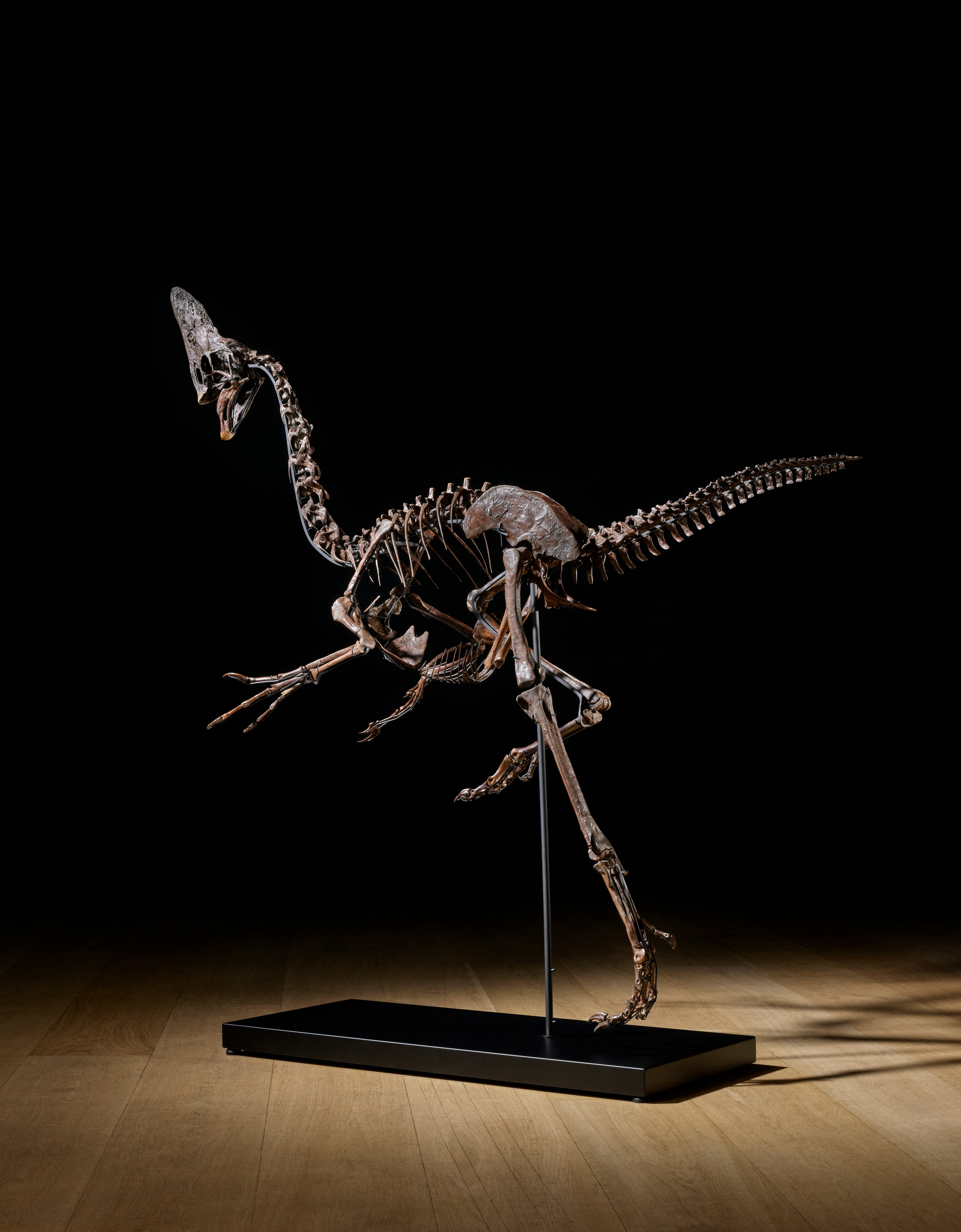
The discovery of "Spike," a rare dinosaur skeleton, is currently captivating experts at Christie's, where the specimen is being showcased as a potential new species within the Oviraptorosaurian group. By providing a platform for this find, Christie’s is offering a rare "time machine" experience for the public and specialists to study a creature that inhabited North America 66 to 68 million years ago. This Caenagnathid stands roughly six feet tall and was remarkably fast, with skeletal features indicating it could reach speeds of 30 to 38 miles per hour, which is significantly faster than a human sprinter. Unlike most Oviraptorosaurs that originate from Asia, Spike was unearthed in the Hell Creek Formation of South Dakota, making it a singular find for the region.
Related article - Uphorial Shopify

Christie’s contribution to the paleontological conversation includes hosting a week-long public viewing before the skeleton goes to auction, encouraging people to see the 100 recovered bones that form a nearly complete "jigsaw" of the animal’s life. Researchers note that the preservation of the right leg, metatarsals, and claws is exquisite, providing new insights into the animal's ecology as a likely carnivore or omnivore that may have stolen eggs or hunted with its formidable claws. While Spike shares similarities with the larger Anzu—the so-called "chicken from hell" discovered a decade ago—its distinct beak and claw structure set it apart as something the scientific community has not seen before.
Beyond the structural bones, the likely presence of keratins suggests Spike may have sported brightly colored feathers or patterns, used for courtship and territorial displays. This shift from the traditional view of dull, lizard-like dinosaurs to a vibrant, complex world is highlighted through the detailed features Spike retains. As the specimen awaits its auction, it remains a scientifically significant marvel that paints a vivid picture of the Late Cretaceous landscape. This skeleton serves as a rare window into a lost world, much like finding a perfectly preserved diary from an era we previously only knew through legends and fragments.